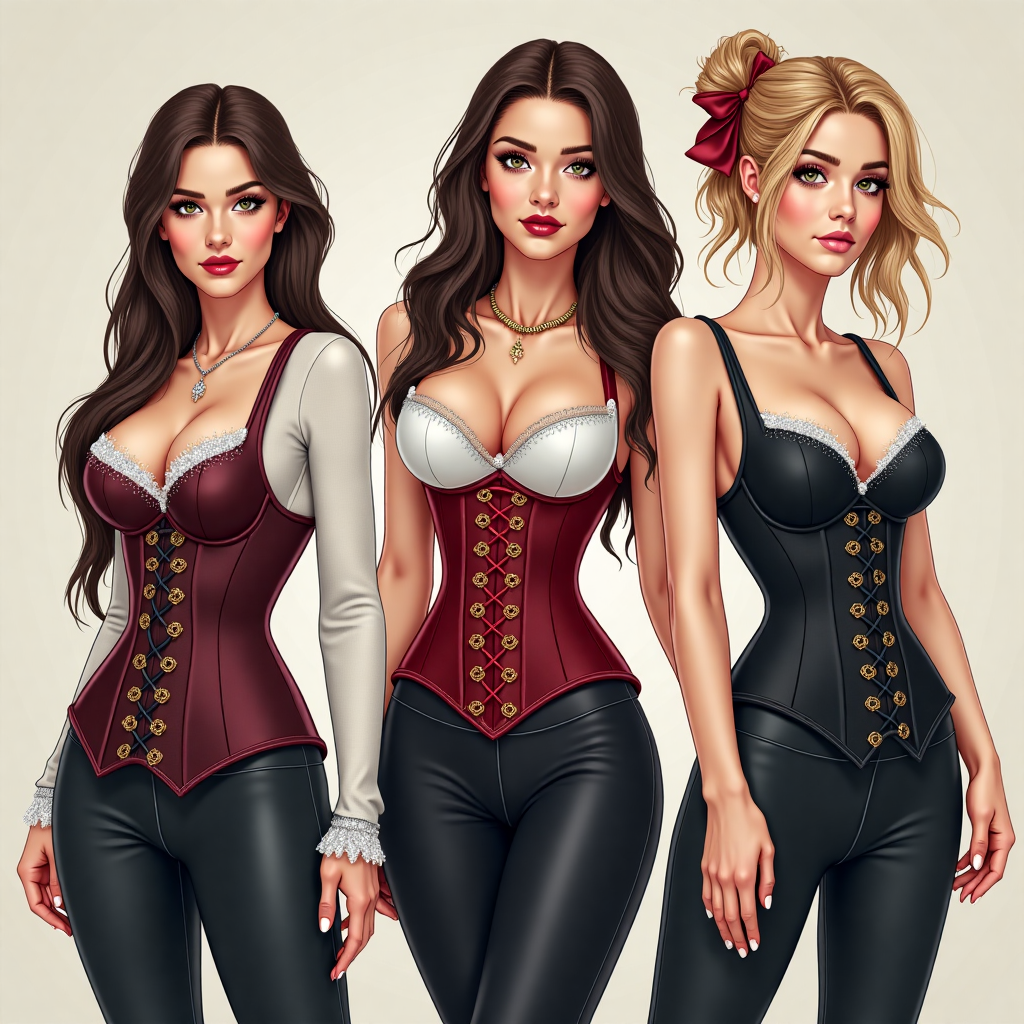
Corsets: From Torture Device to Empowerment Symbol
The word ‘corset’ instantly conjures images: Scarlett O’Hara clinging to a bedpost, gasping for air as Mammy pulls her laces; Victorian women swooning from the ‘vapors’; a symbol of patriarchal oppression, literally squeezing the life out of women. For decades, this restrictive garment was the poster child for historical misogyny. Yet, open a fashion magazine or scroll through social media today, and you’ll find a very different narrative. The corset has staged a spectacular comeback, no longer lurking in the shadows of history but strutting on red carpets, dominating music videos, and being reclaimed as a powerful emblem of strength, sexuality, and self-definition. This journey from perceived torture device to modern empowerment symbol is a fascinating tale of shifting cultural values, feminist reclamation, and the enduring power of silhouette.
The Cinched Century: Roots in Restriction
To understand the corset’s modern metamorphosis, we must first confront its contentious past. Emerging in recognizable form in the 16th century, the corset (or ‘pair of bodies’) was fundamental to creating the fashionable female silhouette for over 400 years. It was not merely underwear; it was architecture for the body, a framework upon which the social ideals of the era were hung.
The Reality of Restriction
The most damning critique stems from the 19th century Victorian era, where the pursuit of an impossibly tiny waist reached its peak. Medical journals of the time blamed corsets for a horrifying catalog of ailments:
- Organ Displacement: Constant pressure was believed to compress and move internal organs like the liver and stomach.
- Respiratory Issues: Tight-lacing restricted diaphragm movement, leading to breathlessness and a propensity for fainting (the famed ‘vapors’).
- Muscular Atrophy: Core muscles, reliant on the corset for support, could weaken over time.
These health concerns, often exaggerated but rooted in real practice, cemented the corset’s reputation as an instrument of torture. Reform dress movements of the late 19th and early 20th centuries, led by figures like Amelia Bloomer, explicitly linked corsets to female oppression. The garment became a powerful metaphor: women were literally constricted by societal expectations, their bodies and breaths curtailed to fit a masculine ideal of fragility and decorum. Its eventual decline in everyday wear in the 1920s, spurred by World War I practicality and the rise of liberating flapper styles, was hailed as a victory for women’s physical and social freedom.
The Great Reclamation: Subversion on the Catwalk and Street
The corset’s return began not as nostalgic revival, but as subversion. In the 1970s and 80s, punk and fetish subcultures, notably through designers like Vivienne Westwood and Jean-Paul Gaultier, began pulling the corset out of the history books and underwear drawer and placing it defiantly on the outside. This was not about recreating a Victorian waist; it was about weaponizing its symbolism. Worn over clothing, in ripped fabrics and with aggressive hardware, the corset became a statement of rebellion, sexual autonomy, and anti-establishment punk ethos.
From Subculture to Mainstream Empowerment
This subversive seed blossomed into a full-blown movement. Pop icons became the new ambassadors. Madonna’s iconic Jean-Paul Gaultier cone corset during her 1990 Blond Ambition tour was a seismic event. It wasn’t demure or restrictive; it was assertive, architectural, and controlled the gaze entirely on her terms. Decades later, stars like Kim Kardashian, Beyoncé, and Lil’ Kim have used corsets to celebrate curves, project formidable confidence, and reclaim narratives around their bodies. On runways, designers from Alexander McQueen to Thom Browne have reinterpreted the corset as armor—a protective, powerful shell for the modern woman.
The modern corset-wearer is often engaging in a conscious act of auto-couture—self-fashioning. She is not being laced by a maid to meet a suitor’s expectation; she is lacing herself up (or choosing an elasticated fashion corset) for her own sense of aesthetic, power, or pleasure. The context flips the meaning: from external imposition to internal choice. Furthermore, the rise of body positivity and inclusivity has expanded the corset’s domain. It’s no longer just for the wasp-waisted; it’s celebrated on all body types, challenging the very narrow beauty standard it once enforced.
Lacing Up the Future: Beyond Binary Narratives
Today, the corset exists in a complex and empowering duality. Its history of restriction is not erased but acknowledged as the foil against which its modern meaning shines brighter. The conversation has moved beyond the simplistic “tool of oppression vs. symbol of liberation” binary.
A Garment of Multitudes
The contemporary corset holds multiple truths at once:
- A Tool of Transformation: Like makeup or heels, it allows for the theatrical presentation of a chosen self.
- A Support Garment, Reimagined: For some, it provides genuine physical support and posture correction, akin to a back brace, but with artistic flair.
- A Unisex Symbol: Its reclamation isn’t solely feminine. In gender-fluid fashion, corsets are worn by people of all genders to explore and express identity, further dismantling its historical baggage.
- Acknowledging the Past: Wearing one today can be an act of historical empathy and reclaiming agency over a symbol that once denied it.
The corset’s journey is a masterclass in how meaning is not inherent in an object but is constructed by culture, context, and who holds the laces. What was once a mandated uniform of femininity has been seized, deconstructed, and re-stitched into a declaration of selfhood. It serves as a potent reminder that the most constrained symbols can be loosened, reinvented, and strutted into the future on our own terms. The corset is no longer about taking breath away; it’s about taking control back.
Leave a Reply