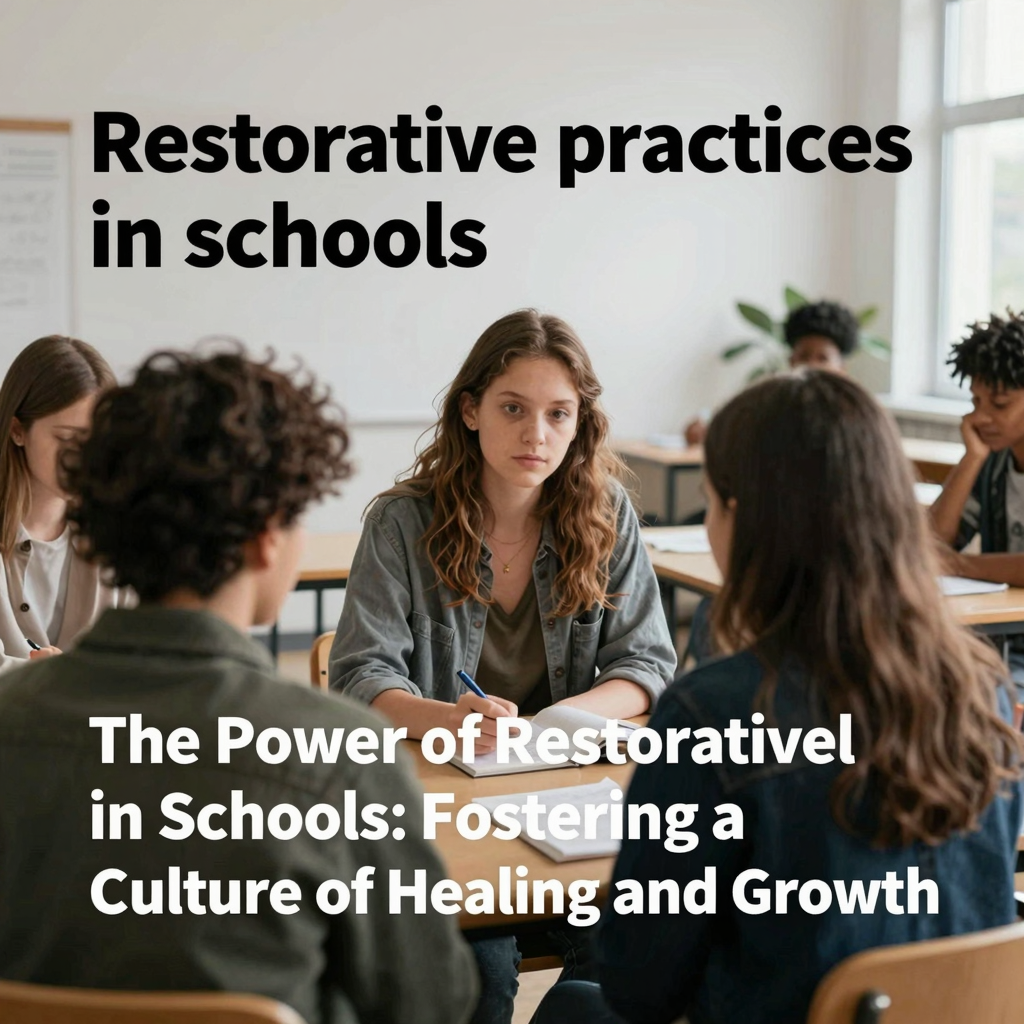
In recent years, schools have increasingly turned to restorative practices as a way to address behavioral issues, improve student well-being, and create a more positive and inclusive learning environment. Restorative practices are not just a set of disciplinary tools but a holistic approach that focuses on repairing harm, building relationships, and promoting a sense of community. This article explores the concept of restorative practices in schools, their benefits, and how they can be effectively implemented to transform school culture.
Understanding Restorative Practices in Schools
Restorative practices in schools are rooted in the idea that discipline should not be about punishment but about learning and growth. Unlike traditional punitive measures, which often isolate students and fail to address the underlying causes of their behavior, restorative practices aim to bring students, teachers, and sometimes parents or community members together to discuss and resolve conflicts. The goal is to create a space where everyone feels heard and understood, fostering empathy and accountability.
At the core of restorative practices is the belief that relationships are key to a healthy school environment. When conflicts arise, whether between students or between students and staff, restorative practices focus on repairing those relationships rather than simply assigning consequences. This approach emphasizes the importance of dialogue, active listening, and problem-solving, allowing students to take responsibility for their actions while also understanding the impact they may have had on others.
One of the most common restorative practices is the use of restorative circles. These circles provide a structured environment where participants can share their experiences, express their emotions, and work together to find solutions. Restorative circles are often used to address minor conflicts, such as name-calling or misunderstandings, but they can also be adapted for more serious issues, like bullying or academic dishonesty. By involving everyone affected by the conflict, restorative circles help to ensure that all voices are heard and that the resolution is inclusive and meaningful.
Key Components of Restorative Practices
Restorative practices in schools rely on several key components to be effective. First and foremost is the emphasis on building community and relationships. Schools that implement restorative practices often start by creating a sense of belonging among students and staff. This can be done through regular check-ins, collaborative activities, and shared experiences that strengthen connections and trust.
Another important component is the use of restorative language. This involves encouraging open and honest communication, where students and staff are taught to express their feelings and listen to others without judgment. Restorative language helps to de-escalate conflicts and promotes a deeper understanding of each other’s perspectives.
Restorative practices also incorporate a variety of strategies, including mediation, conferencing, and reflection. These strategies are designed to help students take responsibility for their actions, understand the consequences of those actions, and work toward repairing any harm caused. For example, a restorative conference might involve a student who has violated school rules, their peers, and school staff coming together to discuss the incident and develop a plan for moving forward.
Benefits of Restorative Practices in Schools
The benefits of restorative practices in schools are numerous and far-reaching. Perhaps the most significant benefit is the reduction in disciplinary referrals and suspensions. Traditional punitive measures often lead to a cycle of misbehavior and punishment, which can contribute to a student’s disengagement from school. Restorative practices, on the other hand, focus on addressing the root causes of behavior and helping students to learn from their mistakes, leading to a decrease in repeat offenses.
Restorative practices also promote a sense of safety and belonging among students. When students feel that they are part of a supportive community, they are more likely to behave positively and contribute to the overall school environment. This sense of belonging can also lead to improved academic performance, as students who feel connected to their school are more motivated to succeed.
Additionally, restorative practices help to build empathy and social skills among students. By engaging in restorative circles and conferences, students learn to listen to others, understand different perspectives, and communicate effectively. These skills are not only valuable in resolving conflicts but also in building strong, positive relationships both inside and outside of school.
Implementing Restorative Practices in Schools
Implementing restorative practices in schools requires careful planning and a commitment to changing the school culture. It is not a quick fix but a long-term strategy that involves training staff, involving students, and creating a supportive environment for all members of the school community.
Training Staff and Building Capacity
One of the first steps in implementing restorative practices is to train staff members. Teachers, administrators, and support staff need to understand the principles of restorative practices and how to facilitate restorative circles and conferences. Training should also include strategies for integrating restorative practices into the daily routines of the school, such as using restorative language in the classroom and promoting community-building activities.
It is also important to build capacity within the school by establishing a team or committee dedicated to restorative practices. This team can help to lead the implementation process, provide guidance and support to other staff members, and ensure that restorative practices are consistently applied across the school.
Involving Students and Creating Buy-In
Students are at the heart of restorative practices, so their involvement is crucial to the success of any implementation. Schools should work to create buy-in among students by explaining the benefits of restorative practices and involving them in the process. For example, students can be trained as peer mediators or facilitators, helping to lead restorative circles and conferences.
Creating student-led initiatives, such as restorative clubs or committees, can also help to promote restorative practices within the school. These initiatives can provide students with a platform to voice their concerns, share their experiences, and work together to build a more positive school culture.
Establishing Restorative Processes
Restorative processes, such as restorative circles and conferences, are the foundation of restorative practices in schools. To establish these processes, schools should develop clear protocols for how they will be conducted, who will facilitate them, and how they will be integrated into the school’s disciplinary framework.
Restorative circles, for instance, can be used as a proactive tool to build community and address potential issues before they escalate. These circles can be held on a regular basis, such as weekly or monthly, and can focus on topics like respect, responsibility, and conflict resolution. When conflicts do arise, restorative circles can be used to address the issue and help students to work toward a resolution.
Restorative conferences, on the other hand, are typically used in response to more serious incidents. These conferences involve the student who caused harm, the student who was harmed, and sometimes their parents or community members. The conference provides an opportunity for all parties to share their perspectives, discuss the impact of the incident, and develop a plan for repairing the harm.
Creating a Supportive Environment
Finally, schools must create a supportive environment that encourages the use of restorative practices. This involves fostering a culture of respect, empathy, and collaboration among all members of the school community. Schools can achieve this by promoting restorative values through their policies, practices, and interactions.
Creating a supportive environment also means ensuring that restorative practices are accessible to all students. This might involve providing training for students with special needs or adapting restorative processes to accommodate different learning styles and cultural backgrounds.
Conclusion
Restorative practices in schools offer a powerful alternative to traditional disciplinary measures, focusing on healing, growth, and community building. By addressing the root causes of behavior and promoting open dialogue, restorative practices can help to reduce conflict, improve student well-being, and create a more positive and inclusive learning environment. While implementing restorative practices requires time, effort, and a commitment to change, the benefits for students, staff, and the school community as a whole are well worth the investment.
As more schools adopt restorative practices, we are seeing a shift away from punitive measures and toward a more compassionate and effective approach to discipline. Restorative practices not only help to repair harm but also foster a sense of responsibility and belonging among students, leading to long-term positive outcomes. If you are interested in transforming your school’s culture, consider exploring restorative practices as a way to create a more supportive and inclusive environment for all.
Leave a Reply