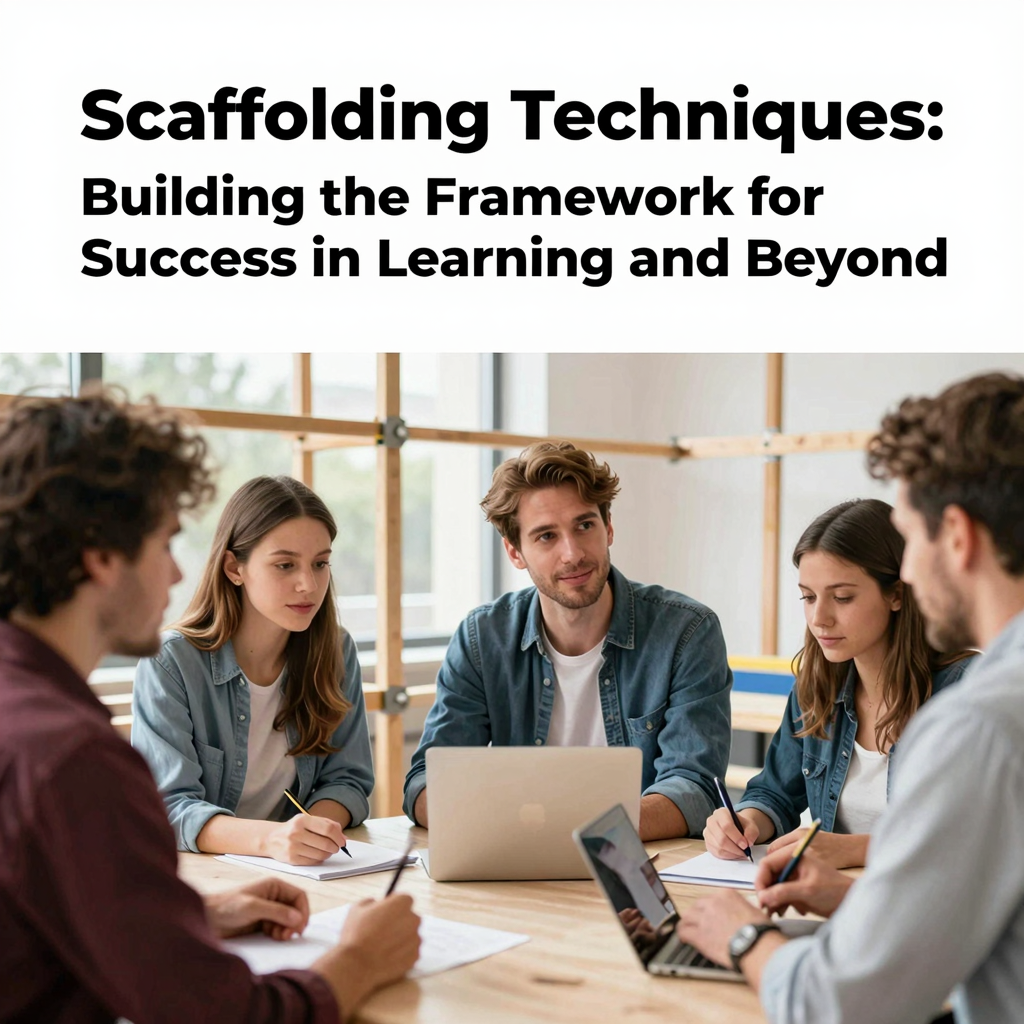
In the world of construction, scaffolding is a temporary structure that provides a stable platform, enabling workers to reach heights and accomplish tasks that would otherwise be impossible. It offers support, access, and safety, only to be removed once the building is strong enough to stand on its own. This powerful concept has found a profound and equally impactful application in the realm of education, professional development, and personal growth. Known as instructional scaffolding, it’s a teaching methodology where an expert provides structured support to a learner, gradually removing it as the learner’s competence and confidence grow. From classrooms to corporate boardrooms, understanding and applying effective scaffolding techniques is the key to unlocking potential and fostering true, lasting independence.
The Core Principles: What Makes Scaffolding Work?
Scaffolding is far more than just “helping.” It’s a deliberate, dynamic, and responsive process rooted in the sociocultural theory of psychologist Lev Vygotsky. Its effectiveness hinges on operating within what Vygotsky termed the Zone of Proximal Development (ZPD)—the sweet spot between what a learner can do independently and what they can achieve with guidance. The goal of scaffolding is to bridge this gap. Effective scaffolding isn’t a one-size-fits-all formula; it’s a tailored interaction that requires the scaffolder (teacher, mentor, manager) to be highly attuned to the learner’s current abilities and actively responsive to their progress. The ultimate aim is always faded support, leading to the learner’s autonomous mastery.
The Essential Components of Effective Scaffolding
For scaffolding to be transformative, several key components must be present:
- Clear Objective & Task Breakdown: The end goal is clearly defined, and the complex task is broken down into manageable, sequential steps.
- Diagnosis of Current Skill Level: The scaffolder must accurately assess the learner’s starting point to provide appropriate support.
- Targeted Support: Assistance is specific to the learner’s needs at that moment—it could be a resource, a prompt, a model, or a strategy.
- Ongoing Feedback & Responsiveness: This is a two-way dialogue. The scaffolder observes, listens, and adjusts the level of support in real-time based on the learner’s performance and questions.
- Gradual Release of Responsibility: The hallmark of scaffolding. The scaffolder systematically reduces support as the learner demonstrates increasing competence, moving from “I do” to “We do” to “You do.”
A Practical Toolkit: Essential Scaffolding Techniques
Theory is vital, but practice is where the magic happens. Here are some of the most powerful and versatile scaffolding techniques that can be applied across diverse settings, from elementary schools to software development teams.
1. Modeling and Think-Alouds
This technique involves the expert performing a task while verbally articulating their internal thought process. It makes invisible cognitive strategies visible. For instance, a writer might show a first draft and talk through their revision choices: “I see this paragraph is wordy. I’m thinking of combining these two sentences. Let me try using a stronger verb here.” This demystifies the process and gives the learner a mental framework to emulate.
2. Providing Anchor Tools and Resources
These are temporary supports that learners can use as references. They include:
- Checklists and Rubrics: Clearly outline task requirements and success criteria, helping learners self-monitor.
- Graphic Organizers: Templates like Venn diagrams, flow charts, or mind maps help structure thinking and organize information.
- Word Banks or Formula Sheets: Provide key vocabulary or equations, reducing cognitive load so learners can focus on the higher-order task.
- Exemplars (Mentor Texts/Examples): Showing high-quality finished products gives learners a concrete vision of the goal.
3. Strategic Questioning and Prompting
Instead of giving answers, effective scaffolders use questions to guide discovery. Prompts can be direct (“What is the next step?”) or more open-ended to stimulate critical thinking (“What would happen if you tried a different approach here?” or “How does this connect to what we learned yesterday?”). This technique fosters problem-solving skills rather than dependency.
4. Pre-Teaching Vocabulary and Concepts
Before introducing a complex new topic, front-load the essential building blocks. Teaching key terms, foundational concepts, or necessary background knowledge equips learners to engage with the core material more confidently. This is especially crucial for learners who may not have prior exposure to the subject matter.
5. The Gradual Release of Responsibility Framework
This is the overarching structure that organizes many scaffolding techniques. It follows a clear, intentional progression:
- I Do (Modeled Instruction): The teacher/expert demonstrates and explains.
- We Do (Guided Practice): Teacher and learners work together. The teacher provides scaffolds (prompts, tools) and collaborative support.
- You Do Together (Collaborative Practice): Learners work in pairs or small groups, applying the skill with peer support. The teacher circulates and coaches.
- You Do Independently (Independent Practice): The learner applies the skill autonomously. Scaffolds are removed, and the learner demonstrates mastery.
Scaffolding Beyond the Classroom: Applications in the Modern World
While born in educational psychology, scaffolding is a universal principle for human development. Its applications are endless wherever skills and knowledge are transferred.
In Corporate Training and Onboarding
Effective employee onboarding is pure scaffolding. It involves: providing clear process manuals (anchor tools), pairing a new hire with a mentor for guided practice, using simulated customer calls (modeling), and gradually increasing responsibility. Project management methodologies like Agile are built on scaffolding principles—breaking work into sprints (task breakdown), daily stand-ups for feedback, and iterative development.
In Technology and Software Design
User experience (UX) design thrives on scaffolding. A well-designed app uses onboarding tutorials (modeling), contextual tooltips (prompting), and progressive disclosure (showing complex features only when the user is ready) to scaffold the user to proficiency. In coding, frameworks and libraries act as scaffolds, providing pre-built structures so developers can focus on unique functionality.
In Personal Coaching and Self-Directed Learning
We can scaffold ourselves. Setting a big goal (like running a marathon) and then creating a training plan that gradually increases mileage is self-scaffolding. Using a language learning app that introduces vocabulary in chunks and reviews it strategically is a digital scaffold. The key is to consciously break down ambitions into supported steps.
The Art of Fading: Knowing When to Step Back
The most delicate and critical phase of scaffolding is the fading process. If support is removed too quickly, the learner may become frustrated and fail. If it’s maintained too long, it creates dependency and hinders confidence. Recognizing the signs of readiness is an art. Look for decreased hesitation, increased accuracy, the ability to self-correct, and the learner beginning to explain concepts to others. The scaffolder’s role shifts from director to consultant, then to a distant safety net, and finally to a celebrant of the learner’s independent success.
Scaffolding, at its heart, is an act of both empowerment and empathy. It requires the scaffolder to meet the learner where they are, to believe in their potential, and to have the patience and skill to build a bridge to a place the learner has never stood before. Whether you are a teacher crafting a lesson, a manager training a team, a parent helping with homework, or an individual tackling a new skill, mastering these techniques allows you to construct not just competence, but confidence. By providing the right framework at the right time, you create the conditions for others—and yourself—to build structures of knowledge and ability that stand strong long after the initial supports have been taken away.
Leave a Reply